
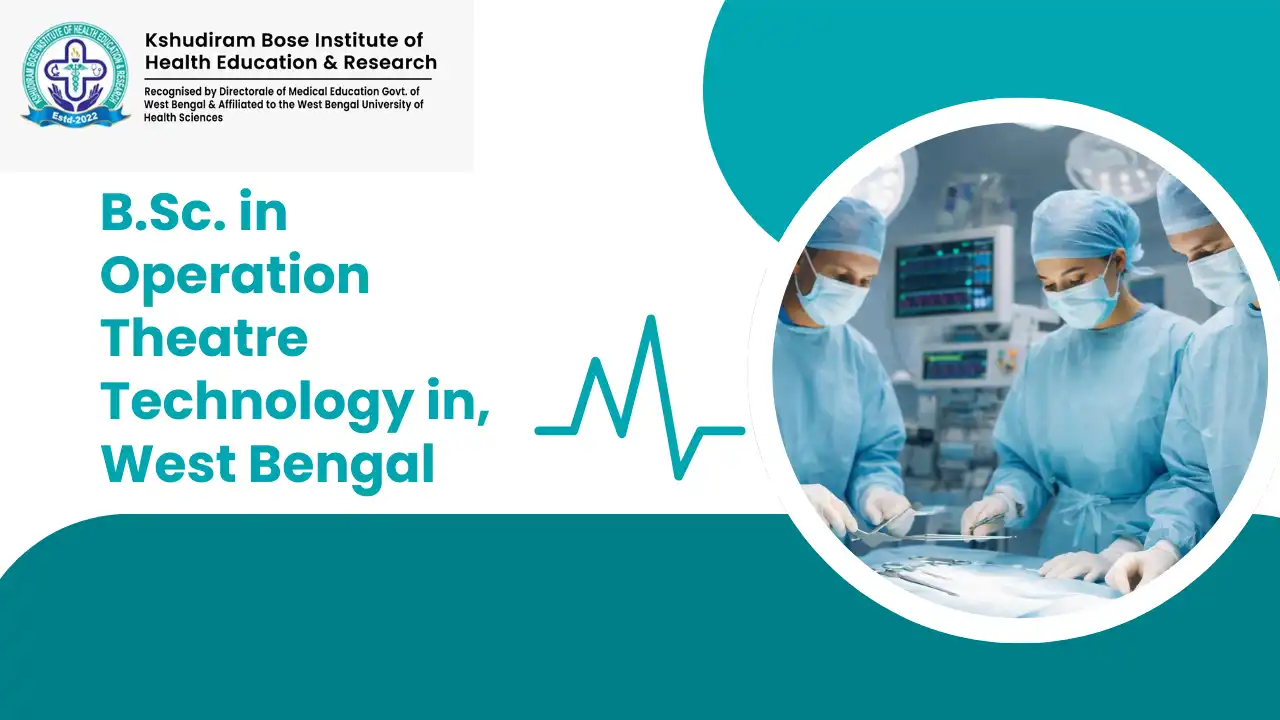
The healthcare sector in India is witnessing remarkable growth, driven by expanding medical infrastructure, technological advancements, and increasing awareness of quality healthcare services. Along with doctors and nurses, allied health professionals play a critical role in ensuring smooth hospital operations. One such important profession is Operation Theatre Technology, which focuses on supporting surgical procedures through technical expertise and clinical assistance.
The B.Sc. in Operation Theatre Technology in Medinipur, West Bengal, offered by Kshudiram Bose Institute of Health Education & Research (KBIHER), is designed for students who aspire to build a stable and respected career in the medical field without pursuing traditional clinical degrees. This undergraduate program combines medical knowledge, technical training, and hands-on hospital experience to prepare students for real-world healthcare environments.
The Bachelor of Science in Operation Theatre Technology is a specialized undergraduate program that trains students to manage operation theatres efficiently and safely. The course focuses on preparing skilled professionals who assist surgeons, anesthetists, and nursing staff before, during, and after surgical procedures.
Students learn about sterilization techniques, handling of surgical instruments, operation theatre protocols, patient positioning, anesthesia support, infection control, and emergency response procedures. By the end of the course, graduates are well-equipped to work in high-pressure surgical environments with confidence and precision.
KBIHER is committed to providing quality education in allied health sciences with a strong emphasis on practical learning. The institute focuses on developing competent healthcare professionals who can meet the growing demands of hospitals and medical institutions.
The B.Sc. in Operation Theatre Technology program at KBIHER is structured to offer a balanced mix of theoretical concepts and hands-on clinical exposure. Students are trained using modern equipment, simulated learning environments, and real hospital settings to ensure they gain industry-relevant skills.
Key strengths of the program include experienced faculty, structured clinical training, updated curriculum aligned with healthcare standards, and a learning environment that encourages professionalism and ethical medical practice.
The B.Sc. in Operation Theatre Technology is generally a undergraduate degree, divided into semesters. Each academic year focuses on progressive learning, starting from basic medical sciences and moving towards advanced operation theatre practices.
In the initial phase, students are introduced to fundamental subjects such as human anatomy and physiology. As the course advances, emphasis shifts to surgical procedures, anesthesia techniques, operation theatre management, and emergency care. The final year includes intensive clinical training and internship exposure in hospitals.This structured approach ensures that students develop strong theoretical foundations along with practical competence required in real healthcare settings.
Candidates seeking admission to the B.Sc. in Operation Theatre Technology program must fulfill basic academic requirements. Applicants should have completed their higher secondary education (10+2) from a recognized board with science subjects, typically including Physics, Chemistry, and Biology.
A minimum qualifying percentage may be required as per institutional guidelines. The eligibility criteria ensure that students possess the scientific background necessary to understand medical concepts and clinical procedures taught during the course.
The curriculum of the B.Sc. in Operation Theatre Technology program is designed to cover all critical aspects of operation theatre functioning. Key areas of study include human anatomy, physiology, microbiology, pathology, pharmacology, and medical ethics.
Specialized subjects focus on operation theatre techniques, surgical instrumentation, anesthesia technology, infection prevention, biomedical waste management, and emergency procedures. Students also receive training in patient safety, hospital protocols, and communication skills essential for working in multidisciplinary healthcare teams.
Clinical postings and internships form a vital part of the curriculum, allowing students to observe and participate in real surgical procedures under professional supervision.
This program helps students develop a wide range of technical and professional skills required in operation theatre environments. Graduates gain expertise in preparing operation theatres, maintaining sterile conditions, and assisting medical teams during surgeries.
Students also develop critical thinking, attention to detail, teamwork, and the ability to perform under pressure. Communication skills and professional ethics are emphasized, ensuring graduates can interact effectively with doctors, nurses, patients, and hospital staff.
The healthcare industry offers vast employment opportunities for qualified operation theatre technologists. Graduates can work in government and private hospitals, multispeciality medical centers, nursing homes, trauma units, and emergency care facilities.Common job roles include Operation Theatre Technician, Surgical Assistant, Anesthesia Technician, and OT Technologist. With experience, professionals may advance into supervisory, training, or administrative roles within healthcare institutions.
Graduates may also choose to pursue higher education in specialized allied health disciplines or hospital management, further enhancing their career prospects.
The salary of operation theatre technologists varies depending on experience, location, and type of healthcare facility. Entry-level professionals generally earn competitive salaries, with steady growth as they gain experience and specialization.
With advancements in surgical technology and increasing demand for skilled healthcare professionals, the long-term career growth in this field is promising. Professionals with strong technical expertise and clinical experience can achieve stable and rewarding careers.
Practical exposure is one of the most important aspects of the B.Sc. in Operation Theatre Technology program. Clinical training allows students to apply theoretical knowledge in real hospital environments and understand the workflow of operation theatres.
Internships help students build confidence, improve technical skills, and develop professional discipline. This real-world experience significantly enhances employability and prepares students for immediate entry into the healthcare workforce after graduation.
With the continuous expansion of healthcare services and increasing number of surgical procedures, the demand for trained operation theatre professionals is expected to rise steadily. Advances in medical technology, minimally invasive surgeries, and specialized treatment facilities further increase the need for skilled OT technologists.
Choosing a career in Operation Theatre Technology allows individuals to contribute directly to patient care and life-saving procedures while enjoying job stability and professional respect.
The B.Sc. in Operation Theatre Technology in Medinipur, West Bengal offered by Kshudiram Bose Institute of Health Education & Research (KBIHER) is an excellent choice for students interested in allied health sciences and surgical support services. This program provides comprehensive academic knowledge, practical training, and exposure to real healthcare environments.
For students seeking a meaningful and future-oriented career in the medical field, this course offers a strong foundation, diverse career opportunities, and the chance to play a crucial role in modern healthcare systems.
If you would like to know more about the B.Sc. in Operation Theatre Technology in Medinipur, West Bengal, or need guidance regarding course details, eligibility, and academic structure, the team at Kshudiram Bose Institute of Health Education & Research (KBIHER) is here to help. Our admissions and academic counselors are available to provide clear information and support to help you make an informed decision about your future in allied health sciences. Reach out to us to explore how KBIHER can help you build a successful career in the healthcare sector.

Kshudiram Bose Institute Of Health Education And Research